Distillation - Working with Steam and Time
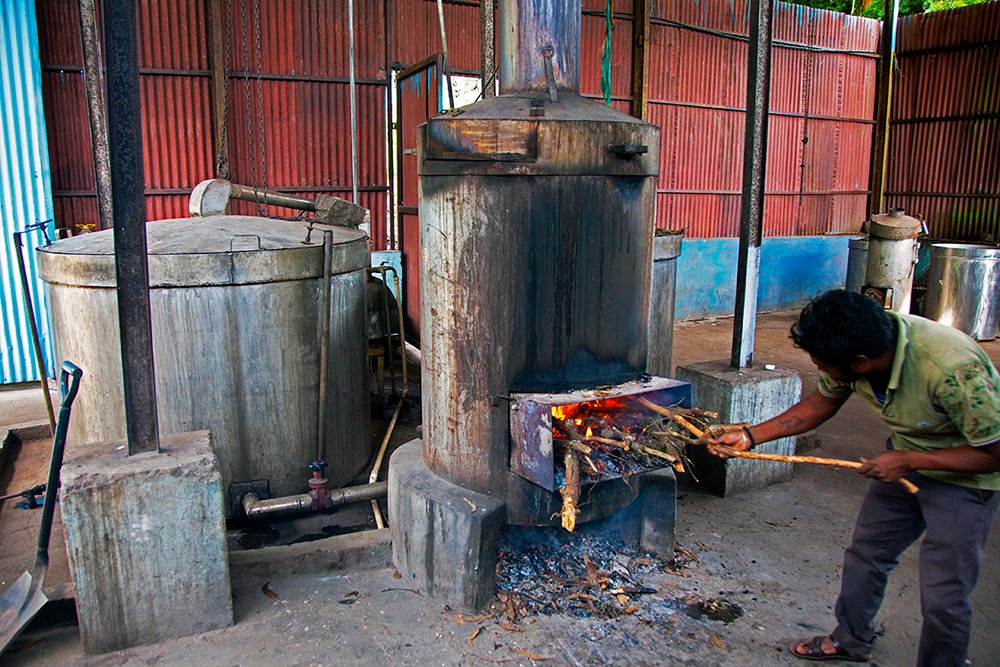
One of the most traditional and widely used methods is distillation. It is used for leaves, flowers, roots, bark, seeds, and many other plant parts.
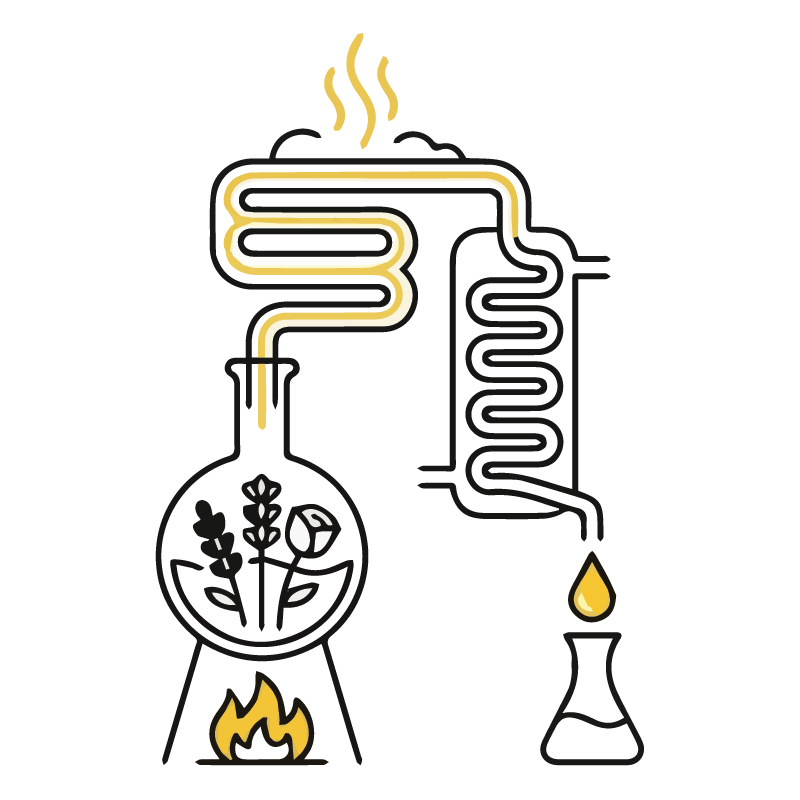
In this process, steam passes through the plant material, gently opening the cells that hold the aromatic compounds. These compounds rise with
the steam and are then cooled back into liquid form. At this stage, the essential oil naturally separates from the water, which is known as hydrosol.
What truly matters here is how gently this is done. When the temperature and pressure are carefully controlled, the oil retains its full character and therapeutic strength.
At Kundalini Aroma, we prefer slower, low pressure distillation. This allows the oil to remain complete, preserving not just its chemistry but also its subtle vitality.

Enfleurage - Capturing the Subtle Fragrance of Flowers
Some flowers are too delicate to be distilled. Their fragrance would be lost if exposed to heat. For these, an older and more patient method is used.
In enfleurage, fresh flower petals are placed onto a layer of natural fat or oil. Over time, the fragrance slowly transfers into this base. The petals are replaced again and again until the aroma becomes rich and complete.
The fragrant material is then carefully separated, leaving behind a concentrated extract known as an absolute.
This method is rare today, but it produces some of the most beautiful and complex floral essences.
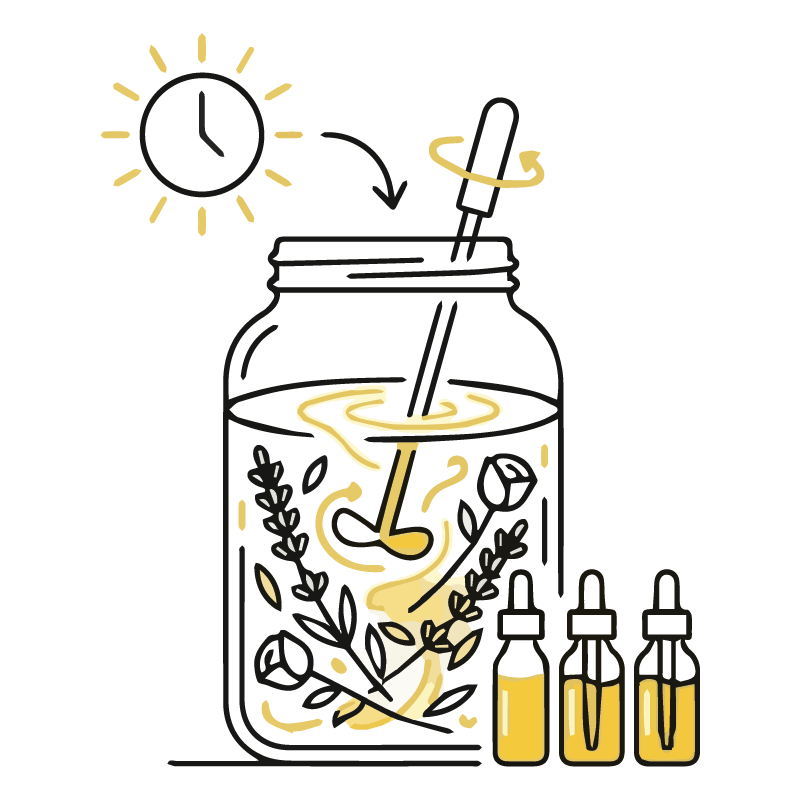
Maceration - Infusing Warmth and Time
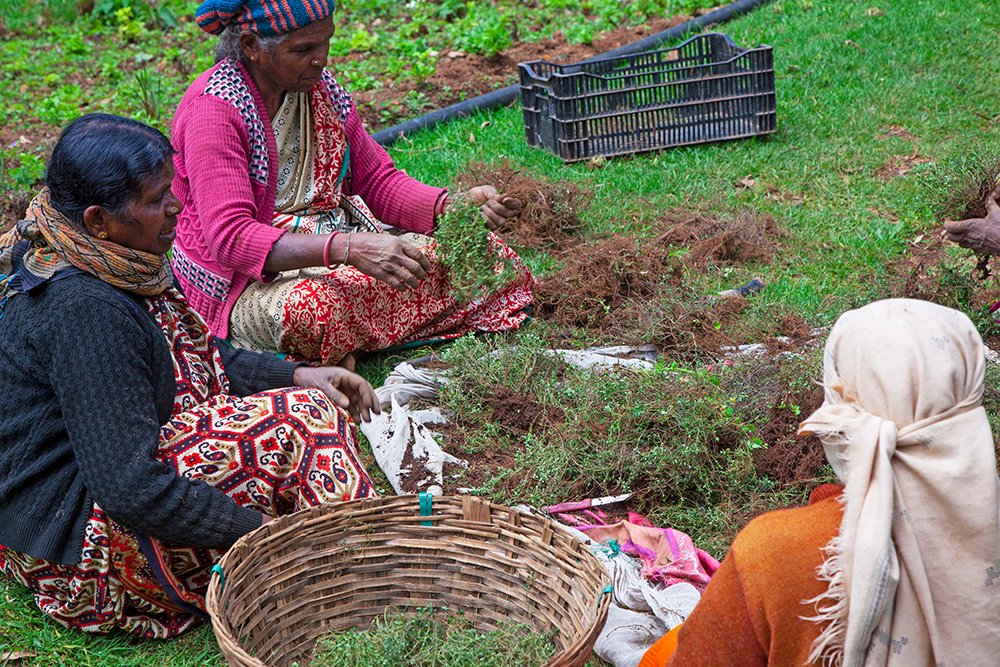
Maceration is a gentle infusion process. Plant materials such as flowers or herbs are placed in a carrier oil and left to slowly release their properties into it.
Sometimes a mild warmth is applied to support the process, but it is always done carefully.
What you receive is not an essential oil, but an infused oil that carries both the nourishment of the base oil and the qualities of the plant.
These oils are especially valued in skincare and massage because they are both gentle and deeply supportive.
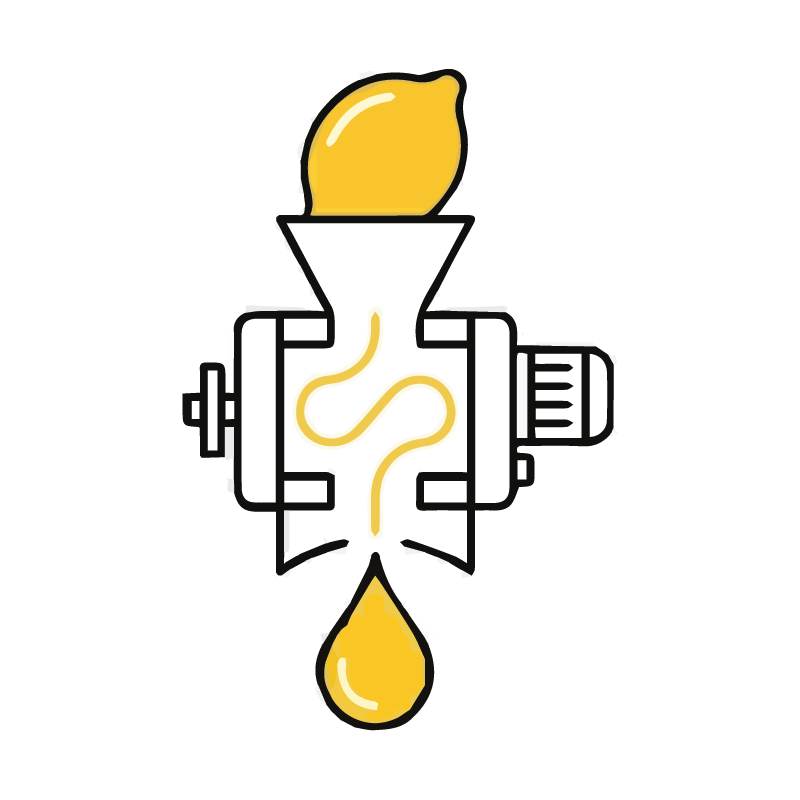
Cold Pressing - Extracting Through Gentle Pressure
Some oils, especially from citrus fruits like Orange, Lemon, Bergamot, Lime, and Mandarin, are not distilled at all. Instead, they are extracted by pressing the peel of the fruit. Within the peel are tiny pockets of oil, and when pressure is applied, this oil is released.
Because no heat is used, the oil remains very close to its natural state. It carries a fresh, vibrant quality that feels uplifting and energizing.
These oils often bring a sense of brightness and clarity, much like the fruit itself.
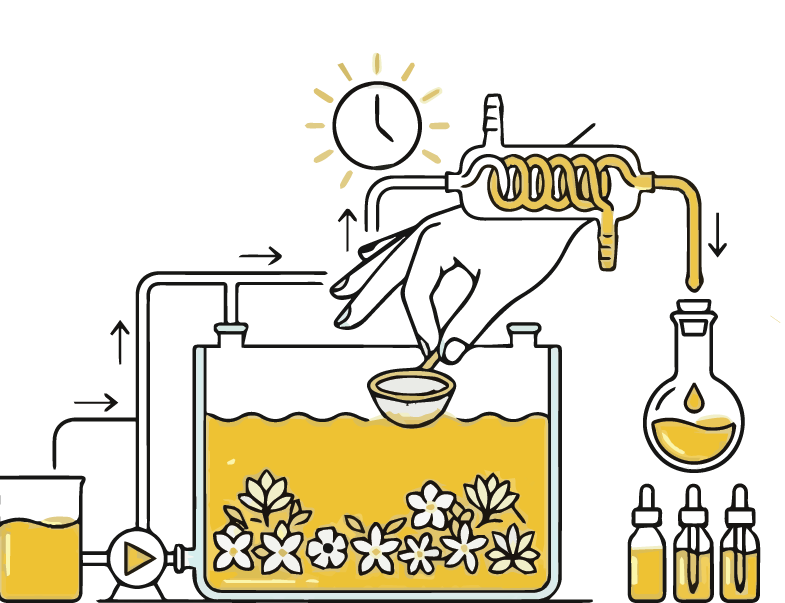
Solvent Extraction - Preserving Fragile Aromas
Some plant materials cannot be distilled or infused effectively. In such cases, a clean solvent is used to draw out their aromatic compounds.
This process first creates a dense material, which is then refined into what is known as an absolute.
Although this is a more modern method, it allows certain rare and delicate fragrances like Jasmine, Tuberose, and Champaka to be preserved.
When done carefully and cleanly, it retains the richness and emotional depth of these flowers.
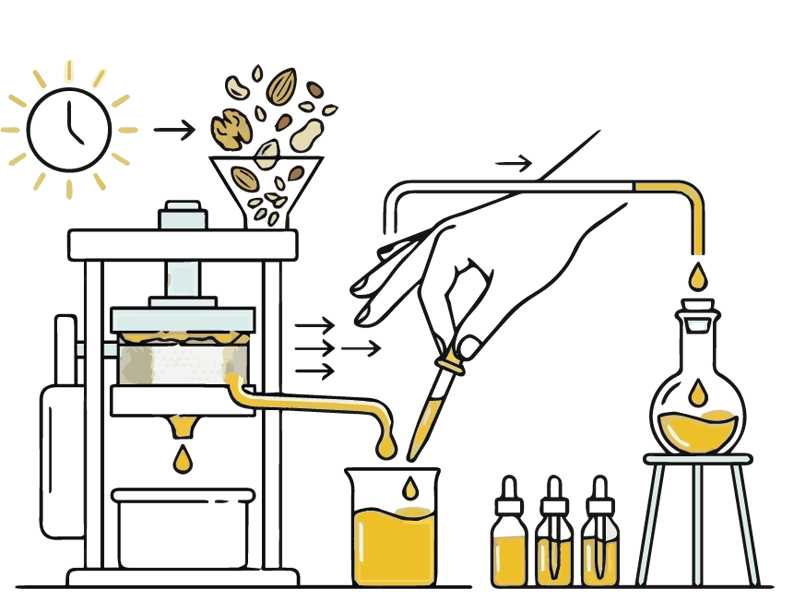
Cold Pressed Carrier Oils - The Foundation of Application
Carrier oils are extracted differently from essential oils. They are usually pressed from seeds, nuts, or kernels. This is done without heat, so that the natural vitamins, fatty acids, and nutrients remain intact.
These oils do not evaporate like essential oils. Instead, they nourish the skin and act as a base that allows e
ssential oils to be applied safely.
They are not just carriers. They are deeply supportive in their own way, helping to hydrate, protect, and restore the skin.